Dining tables for every space: materials, shapes and sizes
23 September 2026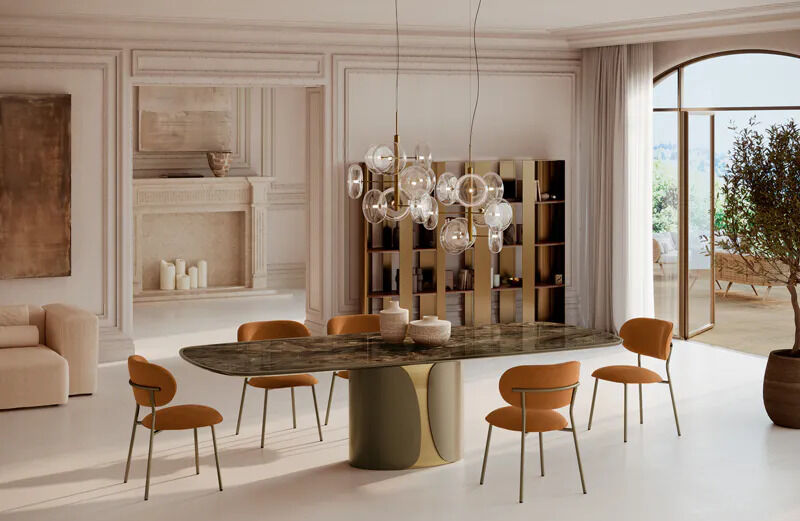
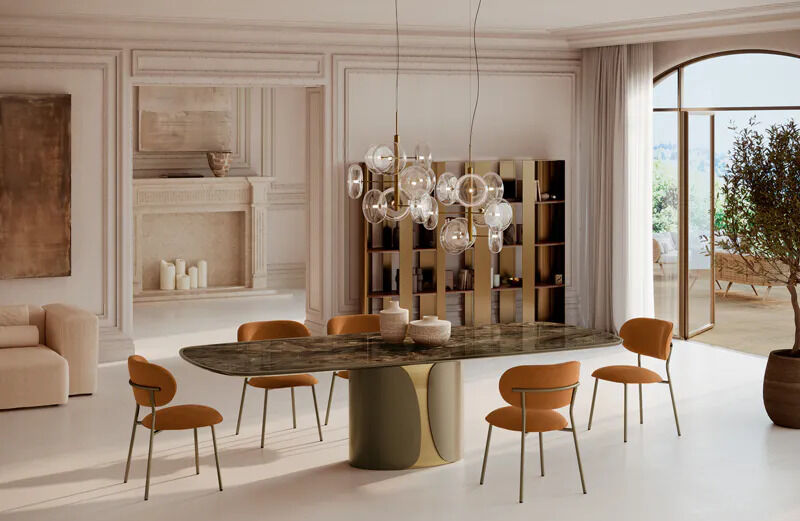
Some pieces of furniture you simply use, others you live around. Dining tables belong to the second kind: they hold the festive dinner and the afternoon homework, a centrepiece and a laptop, often on the same day. They are the one piece in the house that still puts people face to face.
Choosing one well means reconciling three variables that rarely pull in the same direction: shape, material and size. This guide brings together the criteria we work through with people furnishing their own home and with those who design for a living, always starting from the real space the table will have to live in.
Sizes: where to really start
A dining table works when it leaves around 60 cm of frontage for every guest, which is the width of a comfortable place setting, and at least 80-90 cm clear between the edge of the top and the nearest wall or cabinet. Those are the centimetres a chair needs in order to pull back and a person needs in order to stand up without asking permission. Below 70 cm the passage still exists, but it turns into an exercise in balance.
Height, fortunately, is the most stable parameter: every Bontempi table has its top 75 cm off the floor, a measurement that works properly with seats around 45 cm and leaves your legs free. The rest is arithmetic applied to the room. First you measure the space available, then you subtract the walkways, and only at the end do you decide the shape: doing it the other way round is the quickest route to falling in love with a table whose dimensions do not fit.
A few concrete references, taken from our collection:
| Model | Shape | Size (W x D x H) | Seats |
|---|---|---|---|
| Etro 54.16 | Fixed rectangular | 140 x 90 x h 75 cm | 6 |
| Etro 54.18 | Fixed rectangular | 190 x 100 x h 75 cm | 8 |
| Millennium Round 52.87 | Extendable round | Ø 125 / 175 x h 75 cm | up to 8 |
| Talos 54.61 | Extendable barrel | 150 / 190 / 230 x 106 x h 75 cm | 6-8 |
| Talos 54.63 | Extendable barrel | 200 / 250 / 300 x 106 x h 75 cm | 8-12 |
The number of seats shown is always the one for comfortable use, not the theoretical maximum. An extendable top, as in the case of Talos, changes that arithmetic: from 200 cm it reaches 300 cm, going from eight people to twelve without changing rooms.
Round tables: the shape of conversation
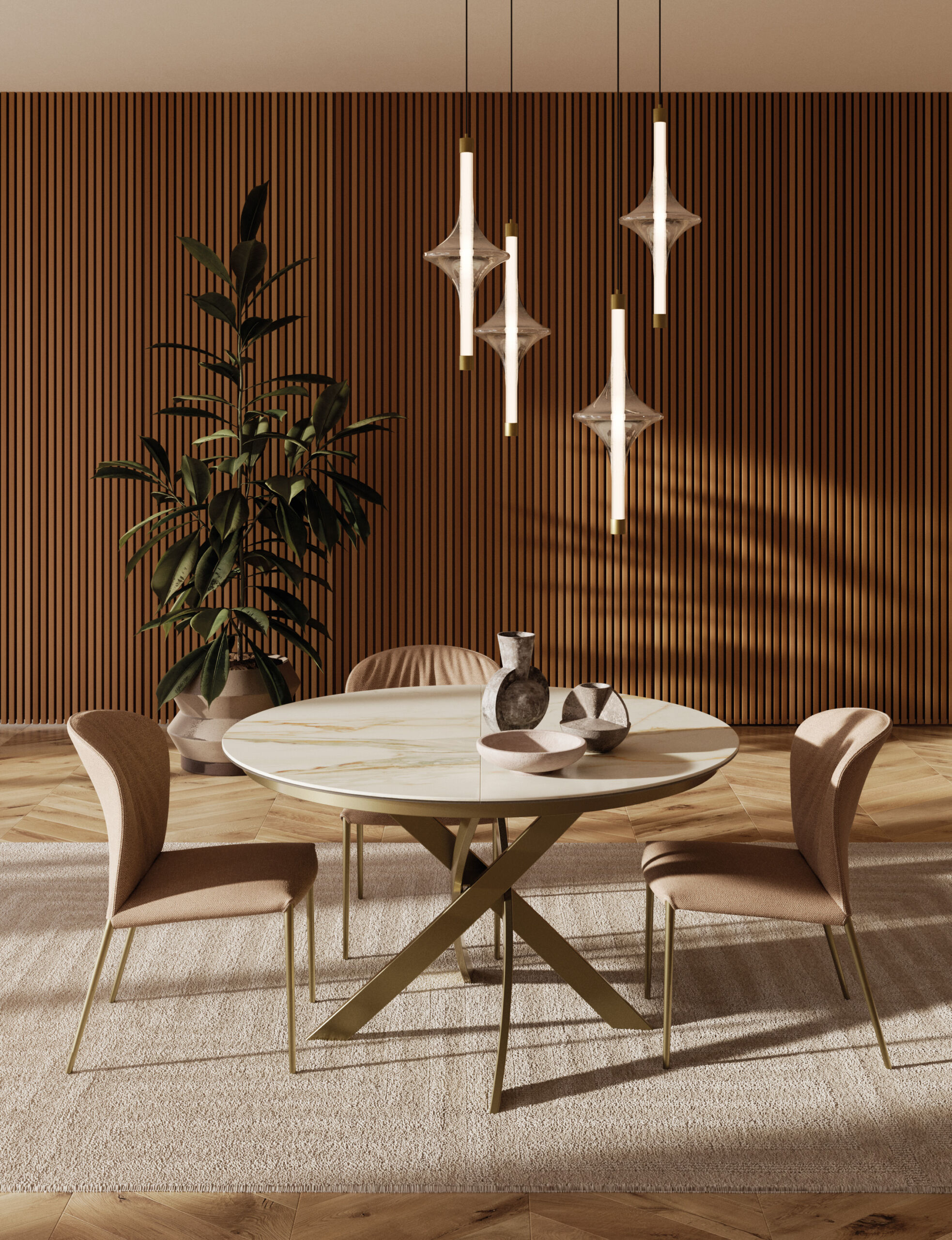
The round table is the most democratic shape there is: nobody sits at the head and everybody can see each other. It is also the most generous in terms of space, because the absence of corners frees up the walkways and allows you to move a few centimetres closer to a wall. In through-rooms and compact spaces it is often the choice that solves the whole project.
Round tables with a central base bring a practical advantage you only notice once you are seated: with no legs around the perimeter, the number of places no longer depends on where the supports fall. Millennium Round starts from a diameter of 125 cm and opens up to 175 cm, seating eight people: in a city apartment it is often the only solution that handles both dinner for two and Christmas lunch.
Anyone looking for a particularly smooth mechanism will find in Giro a synchronised telescopic system and tops in polished or matt anti-scratch crystal, while Barone takes the round shape into an elliptical version as well, fixed or extendable, with the ring variant and its recessed revolving central top: a detail that anyone who likes to lay the table at the centre understands the first time they serve.
Other rounded shapes in the Bontempi collection include Kaleido, elegant and imposing thanks to its monumental base, and Bach, with its considerable presence.
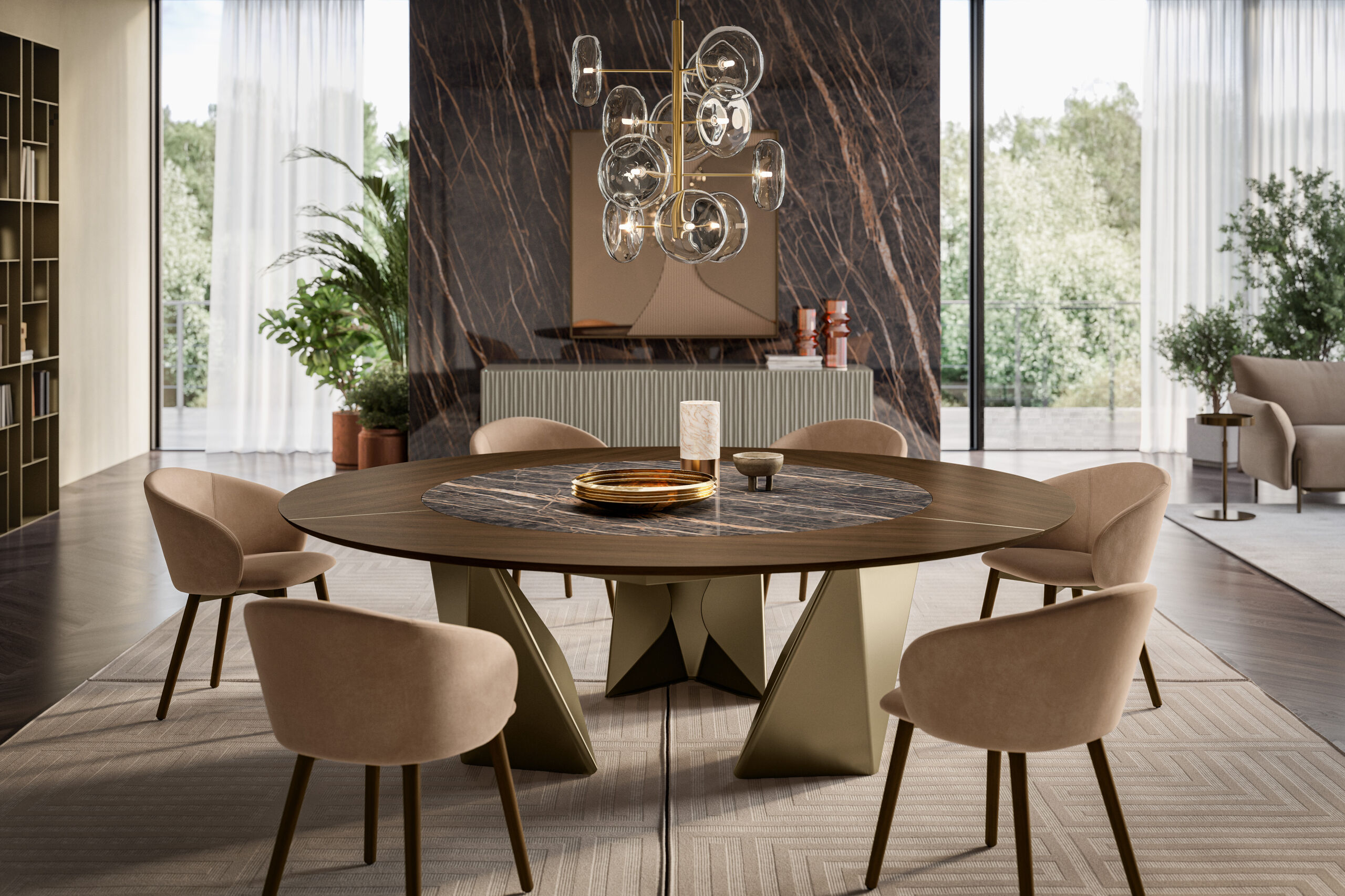
If round is the direction you have in mind, the dedicated read is still our guide to the round table, where you will also find the minimum diameters recommended for each number of guests.
Square tables: geometry and discipline
Square tables are the shape that asks for the most rigour. They work when they echo the geometry of the space instead of fighting it: rooms with a square plan, dining corners carved out of a larger space, kitchens where the table sits against a wall and doubles as a work surface. Four people are comfortable on a side of 90-100 cm; beyond 140 cm the distance between guests starts to feel more like a meeting than a dinner.
The extendable square version is the smartest compromise for medium-sized spaces, because it starts compact and turns rectangular when the occasion calls for it. Etro, designed by Pocci & Dondoli, is a good example of that flexibility: the same family includes rectangular, fixed square, extendable square and oval versions, with the same rounded leg holding the entire collection together. The shape of the top changes, the language of the piece does not: hardly a secondary point when the dining area is in full view of the living room.
Rectangular and barrel: when the house has to change size
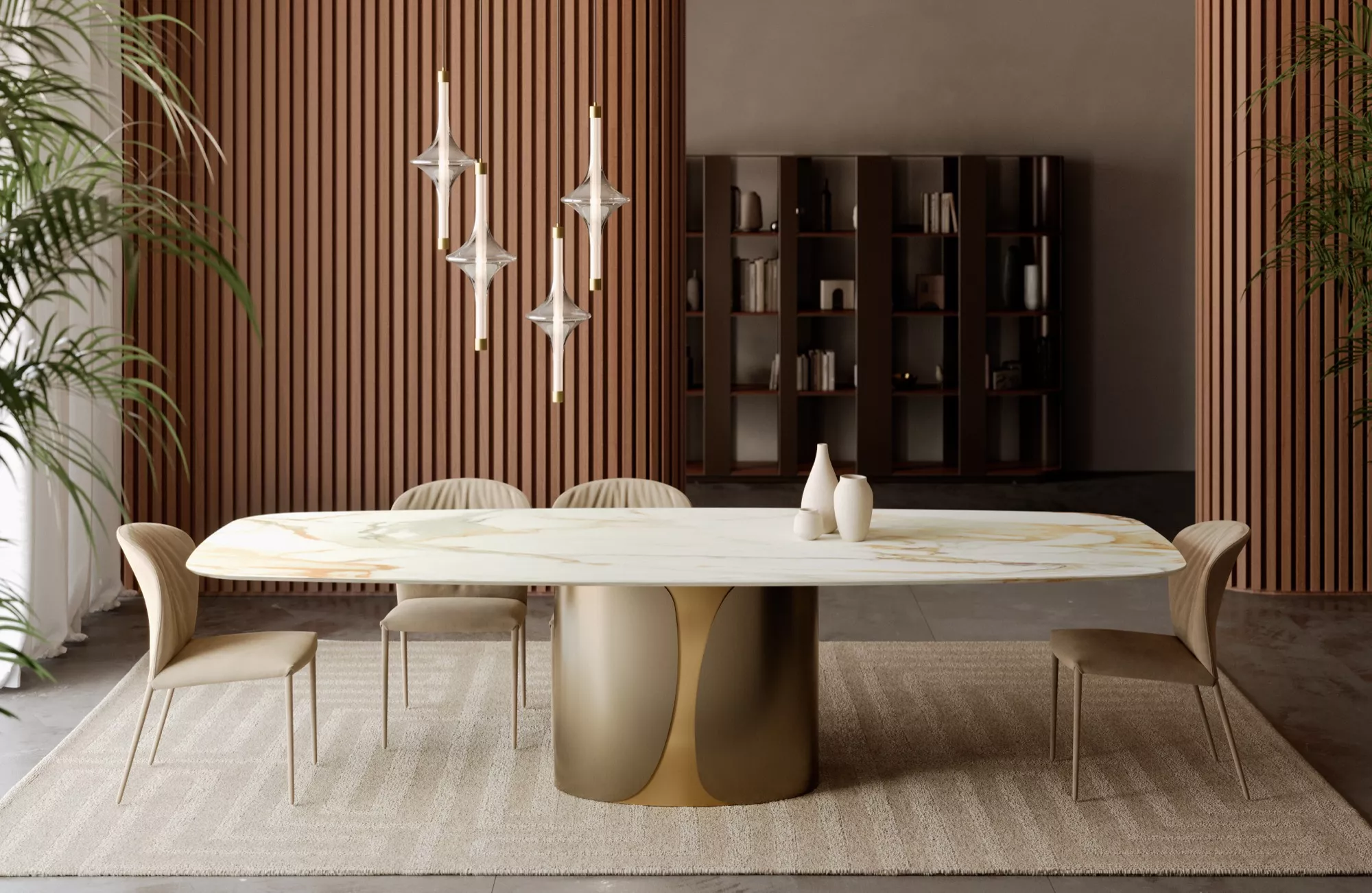
Rectangular remains the most efficient shape in relation to the centimetres it takes up, and the only one that handles large numbers effortlessly. The barrel top, gently rounded on the short sides, is its softer version: it eases the perception of bulk and improves the view between people sitting at opposite corners.
Talos works exactly in this territory. The monolithic elliptical base, formed by two symmetrical shells that wrap around the central body, does away with perimeter legs and leaves the heads of the table free; the extendable versions cover a range that goes from 150 to 300 cm in length. It is the type to consider for anyone who entertains often and does not want a permanently oversized table: the whole extendable table family exists to hold these two opposing needs together.
Materials: crystal, SuperMarble, SuperCeramic and wood
The material of the top is the choice you see from across the room and feel every day. It is worth assessing on two separate levels: how it reacts to the light in the room, and how it reacts to the use you will give it.
Crystal
Bontempi glass tables fall into two families. Polished crystal, available in extrawhite, black and taupe, reflects the light and visually lightens the top: it is the right choice when the room is small or when the table lives alongside furniture with a strong presence. Matt anti-scratch crystal (white, taupe, anthracite, black) gives up the reflection and gains in everyday practicality, because the matt surface is more forgiving with marks and fingerprints. The two finishes completely change the character of the same table.
SuperMarble
It brings the pattern of marble into the home, from Calacatta Supreme to Noir Desir, from Taj Mahal to white Travertine, with a continuity of veining and a regularity of surface that natural stone cannot guarantee. On extendable tables the extensions can be made in the same finish as the top, so the pattern does not break when the table opens.
SuperCeramic
Anthracite, white, sand, Savoia grey: this is the surface least troubled by heat and scratches, which makes it the natural choice when the table lives in the kitchen and is used every day. Mineral looks, minimal upkeep.
Wood
Veneered wood, in natural oak, spessart oak and walnut, is still the only material that improves as it ages and the only one able to warm up a room with cold finishes. It works particularly well alongside lacquered metal frames, where the contrast between timber and metal finish becomes the real style statement. The range is completed by melamine, practical and light, and concrete for bases with a more architectural presence.
A different table for every space
In the living room the table is on display: it gets looked at even when nobody is sitting at it. This is where crystal and SuperMarble tops give their best, provided the rest of the living area follows the same direction. If you are working on the whole room, we have gathered the overall criteria in our guide to living room furniture.
In the kitchen the order of priorities changes: you assess the resistance of the top and the width of the walkway first, and the aesthetics second. SuperCeramic and melamine are the most suitable materials, and a small-diameter round table often solves situations that a rectangular one would make impractical.
In open-plan spaces the table becomes a hinge between the dining and living areas: it pays to align the metal finishes with those of the seating and the lighting, and to repeat the material of the top in at least one other element in the room. For hotels, restaurants and bespoke projects, on the other hand, the dedicated selection is the one in the contract area, designed for levels of resistance and volumes different from domestic ones.
Table and chairs: the pairing that decides the result
The wrong table with the right chairs is a recoverable mistake; the other way round, much less so. The practical rules are few: leave 15-20 cm between one chair and the next, check that any armrests pass under the top rather than against the frame, and do not repeat the same finish everywhere, or the whole thing falls flat. We devoted an entire article to how to match chairs and stools to your table, including the height references between seat and top.
Frequently asked questions about dining tables
How big should a dining table for six people be?
A rectangular table of 160 x 90 cm comfortably seats six, while a round one needs a diameter of around 130-140 cm. The criterion to apply is always the same: about 60 cm of frontage per guest.
Round or rectangular: which is better?
It depends on the geometry of the room, not on taste. Round works better in compact, square or through-spaces, because it has no corners and encourages conversation. Rectangular performs better in long rooms and open-plan spaces, where capacity in relation to the space occupied is what matters.
How much space is needed between the table and the wall?
Between 80 and 90 cm for comfortable movement with the chairs occupied. Seventy centimetres is the workable minimum on a secondary side, while on the main serving side it is better not to go below 100 cm.
What is the standard height of a dining table?
Seventy-five centimetres from the floor. It is the measurement of every Bontempi dining table and it pairs with seats around 45 cm high, leaving the room needed for your legs.
Are glass tables suitable for everyday use?
Yes, provided you choose the right finish. Matt anti-scratch crystal was created for exactly this: the non-polished surface is more resistant to marks and holds fewer fingerprints than polished crystal, which gives its best where the table is used less frequently.
Is an extendable table as stable as a fixed one?
Yes, when the mechanism is built into the structure and the extensions are stored away under the top. On Bontempi models the extensions can be ordered in the same finish as the top, in SuperMarble or SuperCeramic, so the surface stays continuous even when the table is open.
The right table is the one that fits your room
It is not the best-looking model in the catalogue: it is the one that respects the measurements of the house, the material that stands up to the way you live and the shape that follows the routes you take every day. The rest, meaning the finish, the colour of the frame, the design of the base, is the enjoyable part of the choice: the part you make once the centimetres are sorted.
Discover the full collection of Bontempi design tables, build your own configuration with the online configurator and see the result in person at your nearest retailer.
Discover the Bontempi collection and find inspiration for designing a living room that reflects who you are.
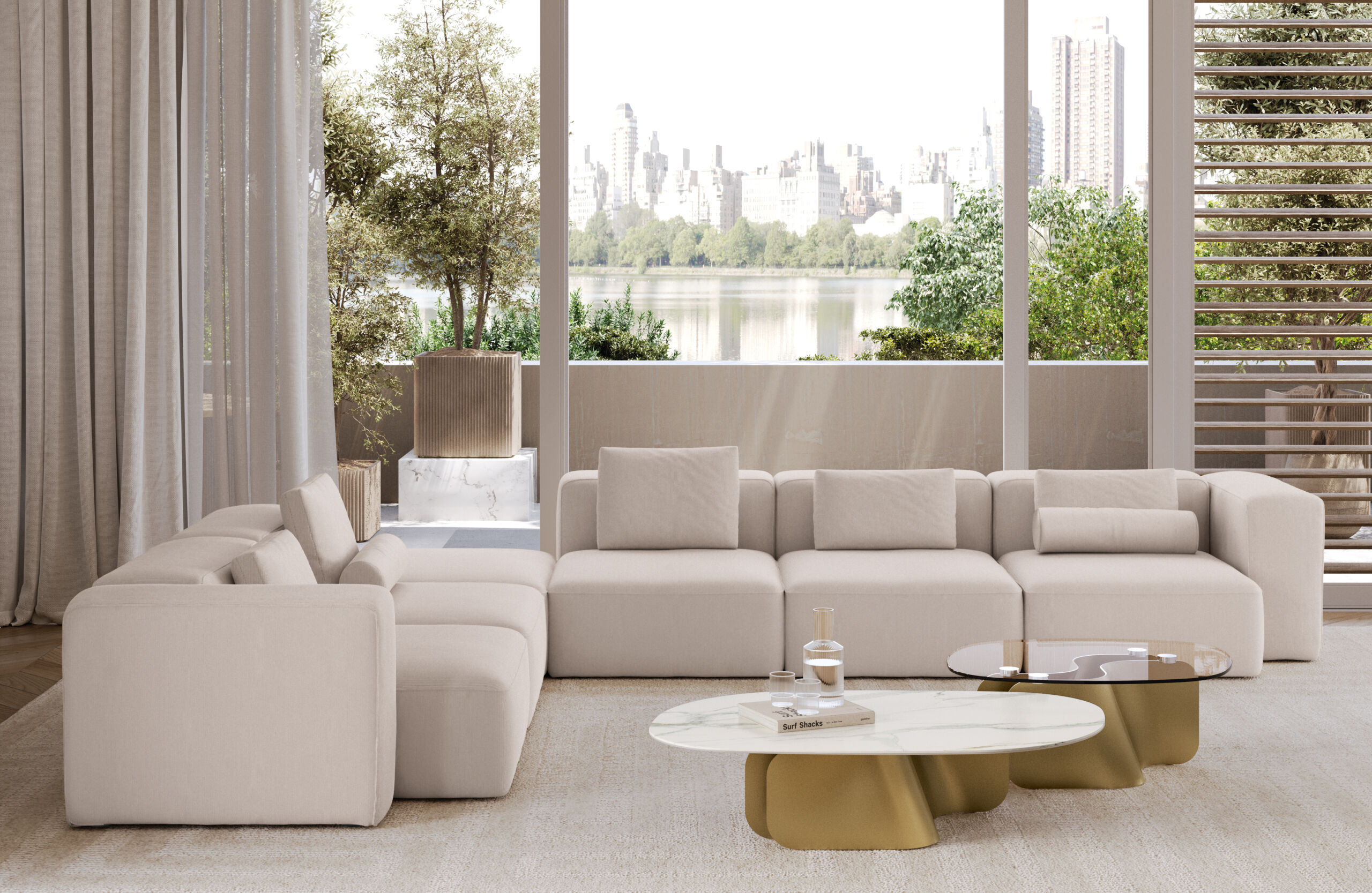
Living room furniture: the
complete guide to modern style
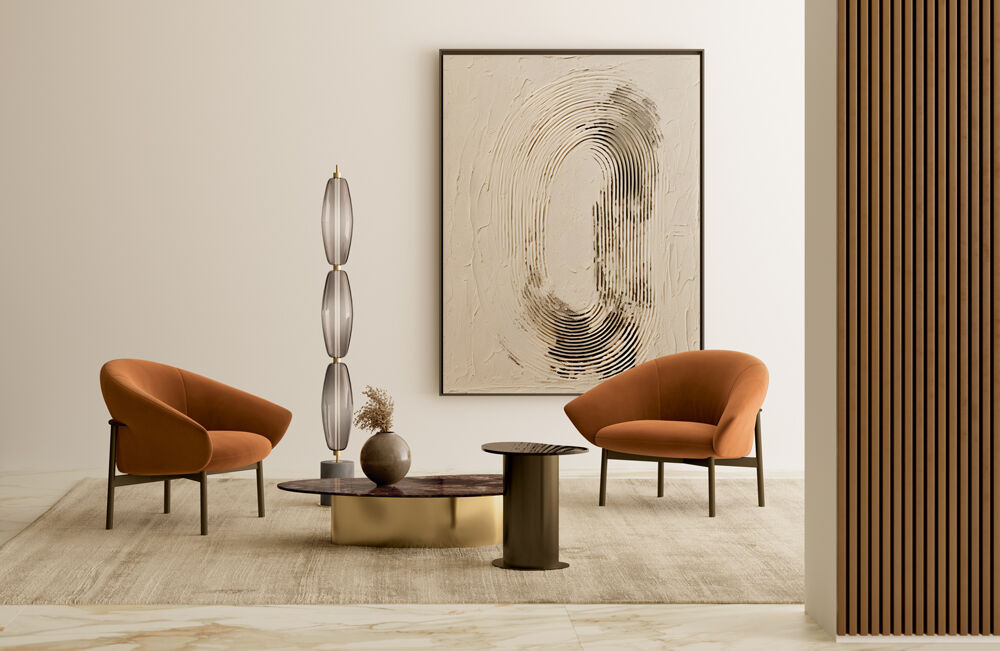
Bontempi wins the prestigious Red
Dot Design Award for the PETRA armchair

The elegance of summer: how to
furnish sea-view living spaces

Ideas for Furnishing a
Small House with Style
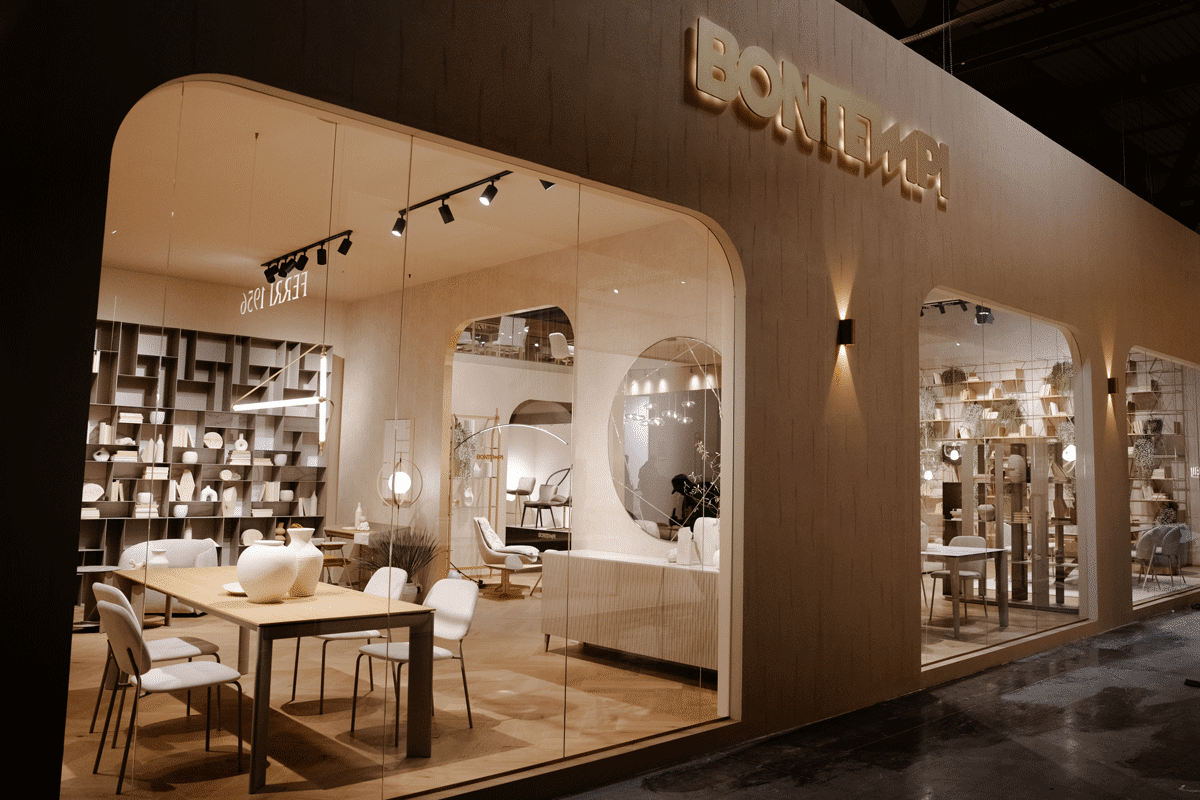
Bontempi unveils the 2026
collection at Salone del Mobile.Milano
Console Tables with Mirrors: Smart
Solutions for Modern Living Rooms
Spring Home Décor: how
to refresh your interiors

How to Create the
Perfect Reading Nook at Home
Chairs and stools: How to Match
Them Correctly with Your Table