Living room furniture: the complete guide to modern style
21 July 2026

The living room is where the character of a home comes together. More than any other space, it reflects the way we choose to live: how we welcome guests, how we relax and how we display the objects that define us. For this reason, furnishing a living room is never purely a matter of aesthetics, but an exercise in balancing functionality, light and materials.
Designing a modern living space requires an overall vision that goes beyond the choice of individual pieces. Each item of furniture should interact with the others and with the surrounding space, helping to create a coherent and distinctive atmosphere. This guide brings together a number of useful principles for furnishing a living room in a contemporary and timeless style, enhancing its materials and proportions while reflecting the personality of those who inhabit it.
The sofa: the starting point for furnishing the living room
Every living room design has a focal point and, in most cases, it is the sofa. It sets the tone of the room even before it is used: its proportions define the geometry of the space, its silhouette suggests the overall style and its materials interact with both natural and artificial light.
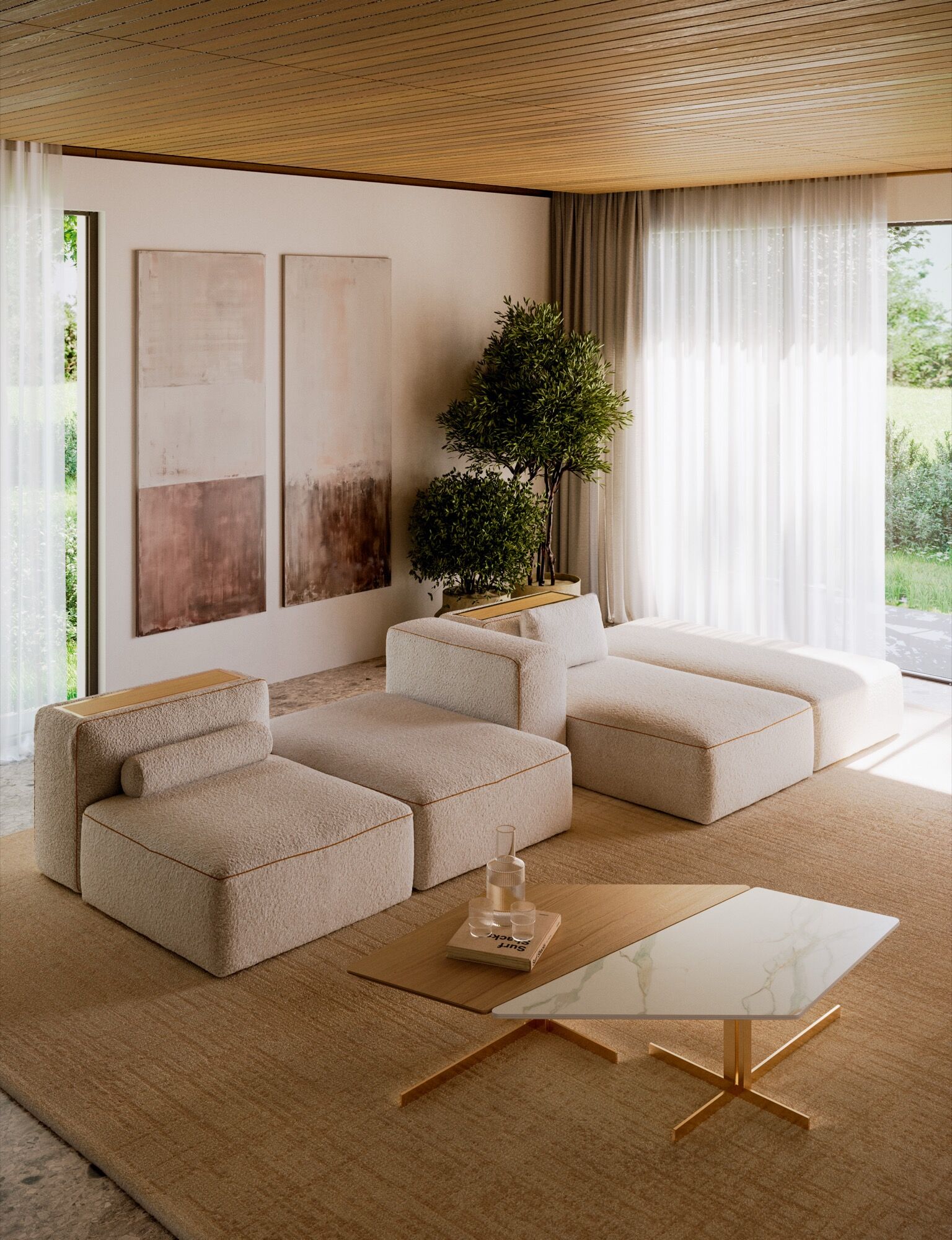
When choosing a sofa, the first consideration should be its relationship with the surrounding space.. In large, bright rooms, a modular sofa such as Blake makes it possible to create clean volumes and bespoke configurations, with natural wood inserts providing integrated surfaces while visually lightening the overall composition. In smaller living rooms, or where a sharper, more architectural look is preferred, the Victor sofa offers an essential silhouette, with balanced geometric forms that enhance the space without overwhelming it.
Bontempi sofas share a common design principle: personalisation as a tool for creating style. Fabric or leather upholstery, extensive colour palettes and modules that can be combined in different configurations make it possible to create a sofa that truly belongs to an individual interior design project, without compromising on either aesthetics or functionality.
Coffee tables and occasional tables: miniature architecture for the living room
While the sofa defines the structure of the living room, the coffee table expresses its personality. It may appear to be a secondary element, yet it can shift the balance of the entire room: its shape, height and surface material directly influence the perception of the space.
Proportions are the first detail to consider. A coffee table that is too large can overwhelm the conversation area, while one that is too small may fail to fulfil its purpose. As a general rule, a linear coffee table should be slightly lower than the sofa seat and measure between two-thirds and three-quarters of its length.
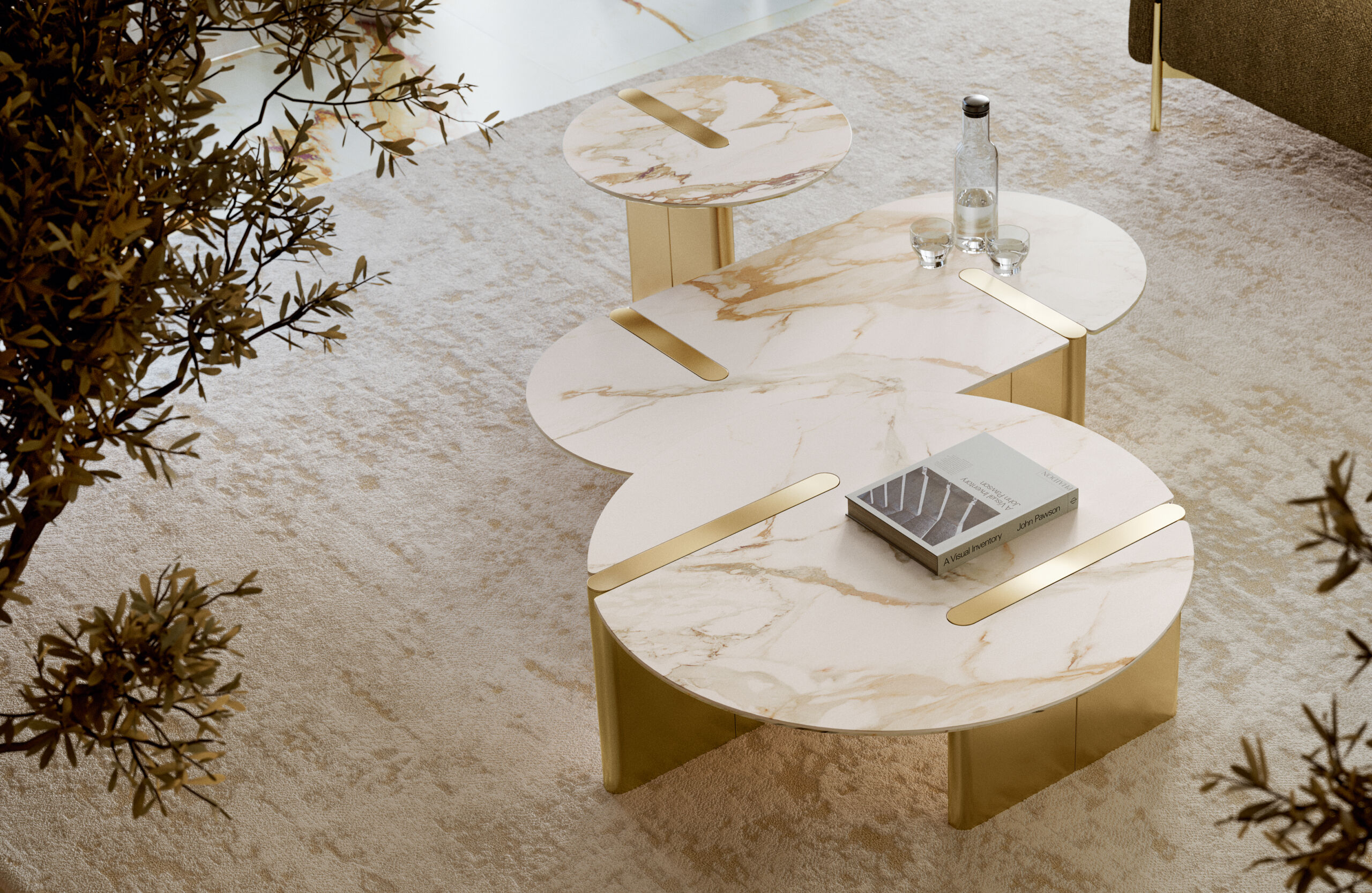
The surface material becomes the true stylistic statement. Scratch-resistant glass amplifies the light and visually opens up the space, making it ideal for compact living rooms or in front of a large, dark sofa. SuperMarble, with its authentic veining, adds depth and becomes a focal point in more minimalist interiors. Lacquered metal with dark brass details introduces a warmer, more tailored note, particularly suited to spaces with neutral tones.
Within the Bontempi collection of occasional and coffee tables, these finishes are combined in individual designs or coordinated families. This makes it possible to place several coffee tables of different shapes and heights together, creating small-scale architectural compositions.
Bookcases and living room storage: order and lightness in the living area
Bookcases and storage systems are among the pieces of living room furniture most capable of defining a space. They are not simply functional solutions: a well-designed bookcase organises the wall, creates visual rhythms and frames objects and volumes like small works of art. In many contemporary living rooms, it becomes the true focal point of the space, even more so than the television or the sofa itself.
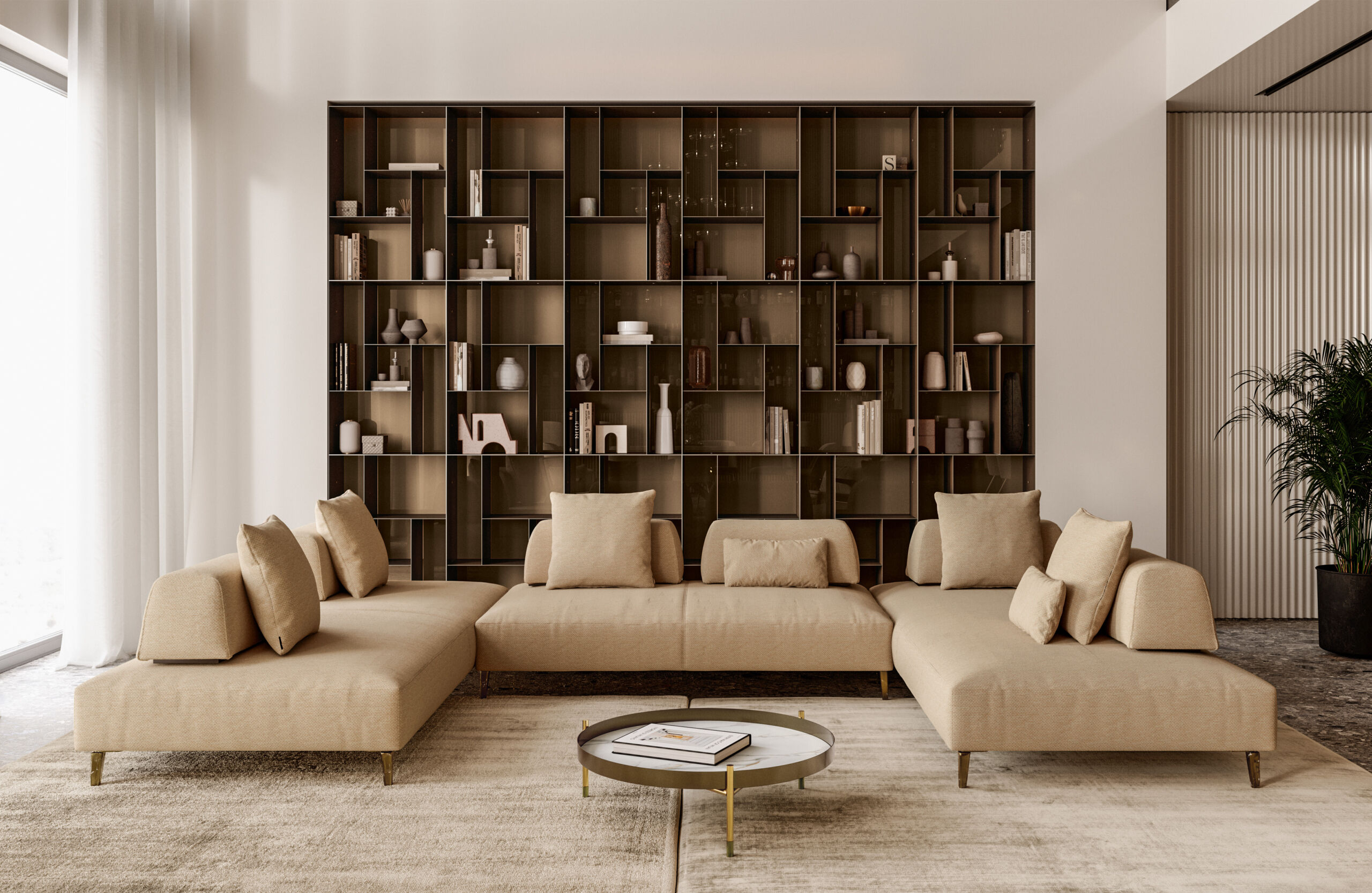
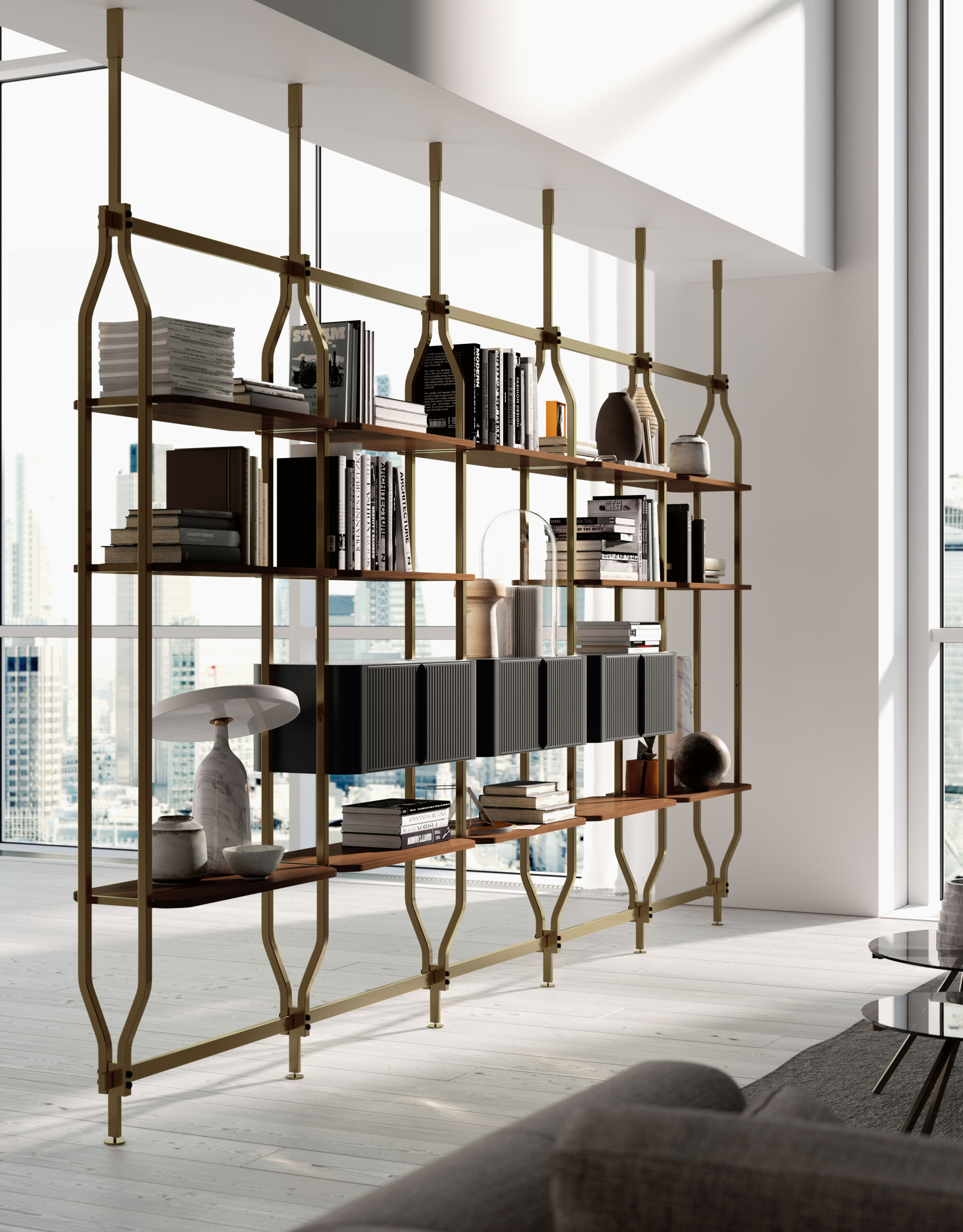
Designer bookcases can be interpreted in many different ways. A floor-to-ceiling structure, suspended between the floor and the beams, can act as a dividing screen, helping to organise an open-plan space without closing it off. A modular wall-mounted bookcase, on the other hand, can expand over time, with shelves and storage units added as habits and requirements evolve.
The secret to a stylish bookcase lies in its rhythm. Alternating vertically and horizontally arranged objects, leaving some compartments empty and playing with depth by layering books and small sculptures are all ways of transforming a storage unit into a true decorative feature.
The materials used for the shelves also contribute to the final effect: glass creates a sense of lightness, veneered wood introduces warmth, while SuperMarble or SuperCeramic provides a bolder and more contemporary look.
Light as a material: lamps and atmospheres for the modern living room
A beautifully furnished but poorly lit living room immediately loses its character. Light is the least visible yet most decisive material in any interior design project: it shapes volumes, reveals the texture of materials and defines different functional areas within the same room.
In a modern living room, lighting should be designed on at least three levels. The main light source, generally diffused from above, ensures that the room remains functional. Accent lighting, such as wall lights or adjustable spotlights, enhances focal points including bookcases and works of art. Finally, ambient lighting creates atmosphere in the evening, transforming the living room into an intimate space after sunset.
Floor lamps are the most versatile way to introduce this third layer of lighting. A sculptural model such as Circle, with its lacquered metal arch and concrete base, brings an almost architectural presence into the living room. It can illuminate the seating area or coffee table while retaining its own strong identity as a design object.
Arched floor lamps, in particular, make it possible to position the light source exactly where it is needed without altering the existing electrical points. This provides valuable design freedom in living rooms where the electrical system has already been defined.
How to furnish a living room: balancing proportions, colours and details
Beyond individual pieces of furniture, there is a language of living room design based on relationships and proportions. Understanding how to furnish a living room ultimately means learning to interpret these relationships before selecting each individual piece. A number of principles can guide any contemporary design project:
- Consistent colour palette: a neutral base of beige, taupe and warm grey allows stronger accents, such as sage green, terracotta or petrol blue, to be introduced without making the overall composition feel heavy.
- Materials in dialogue: natural wood, lacquered metals, glass and premium leathers enhance one another when combined with restraint. It is better to use two or three clearly recognisable material families than to accumulate a wide range of different finishes.
- Empty space as a design feature: allowing walls and floors to breathe is just as important as selecting the furniture itself. In a modern living room, the empty space surrounding a design piece enhances its presence and value.
- Continuity with adjoining rooms: in a contemporary home, the living room, dining area and entrance often share the same open space or overlook one another. Coordinating colour palettes and stylistic families prevents visual disruptions and creates harmony throughout the entire living area.
An elegant living room is created through a combination of carefully considered choices, rather than a single iconic piece. It is the balance between the sofa and the coffee table, the bookcase and the lamp, and the relationship between filled and empty space that defines the authentic character of the room.
Discover the Bontempi collection and find inspiration for designing a living room that reflects who you are.
Bontempi brings the 2026
Collection to High Point Market
Dining tables for every
space: materials, shapes and sizes
Bontempi wins the prestigious Red
Dot Design Award for the PETRA armchair

The elegance of summer: how to
furnish sea-view living spaces

Ideas for Furnishing a
Small House with Style
Bontempi unveils the 2026
collection at Salone del Mobile.Milano
Console Tables with Mirrors: Smart
Solutions for Modern Living Rooms
Spring Home Décor: how
to refresh your interiors

How to Create the
Perfect Reading Nook at Home