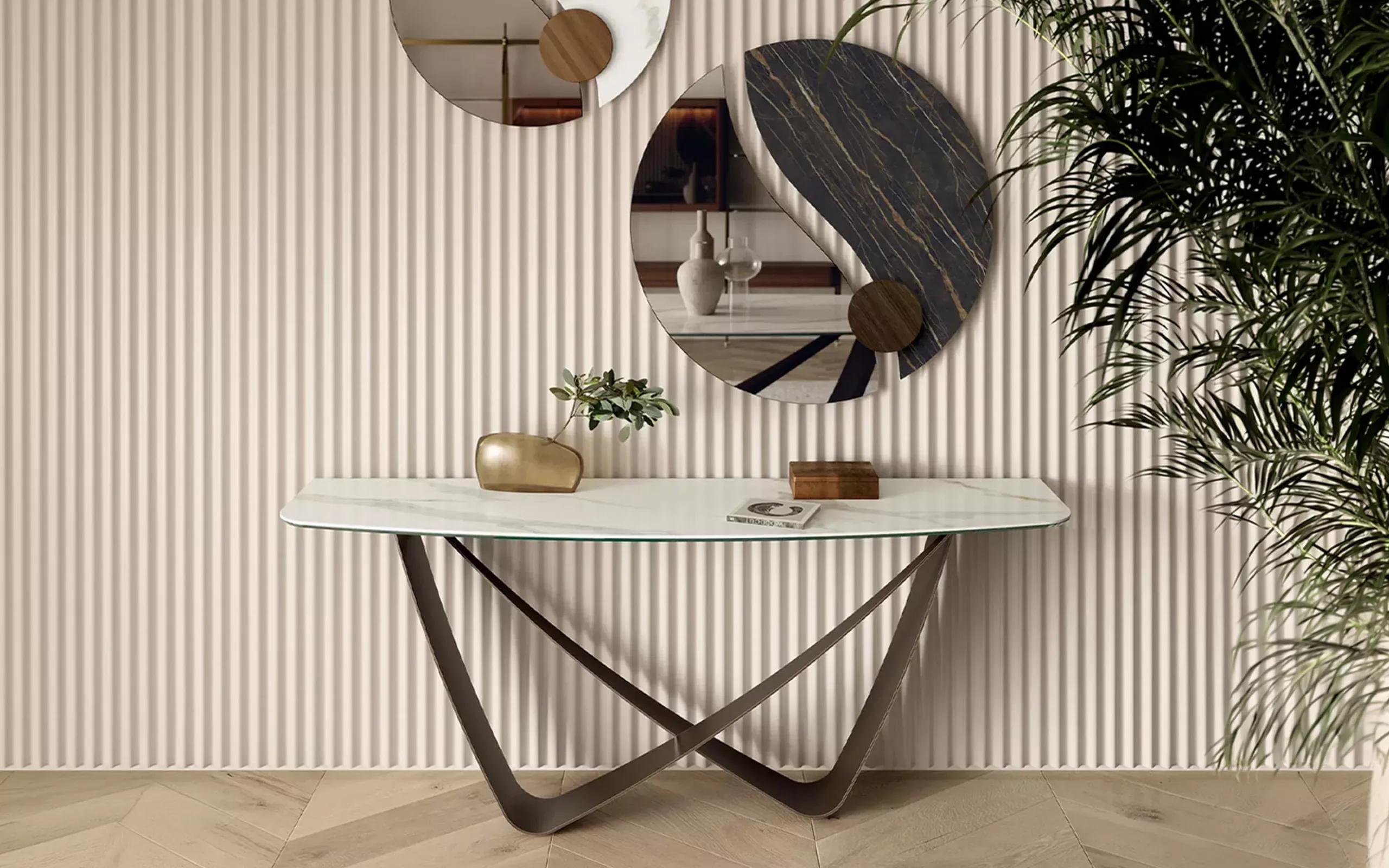
Hallway ideas: how to furnish your entrance hall
25 November 2026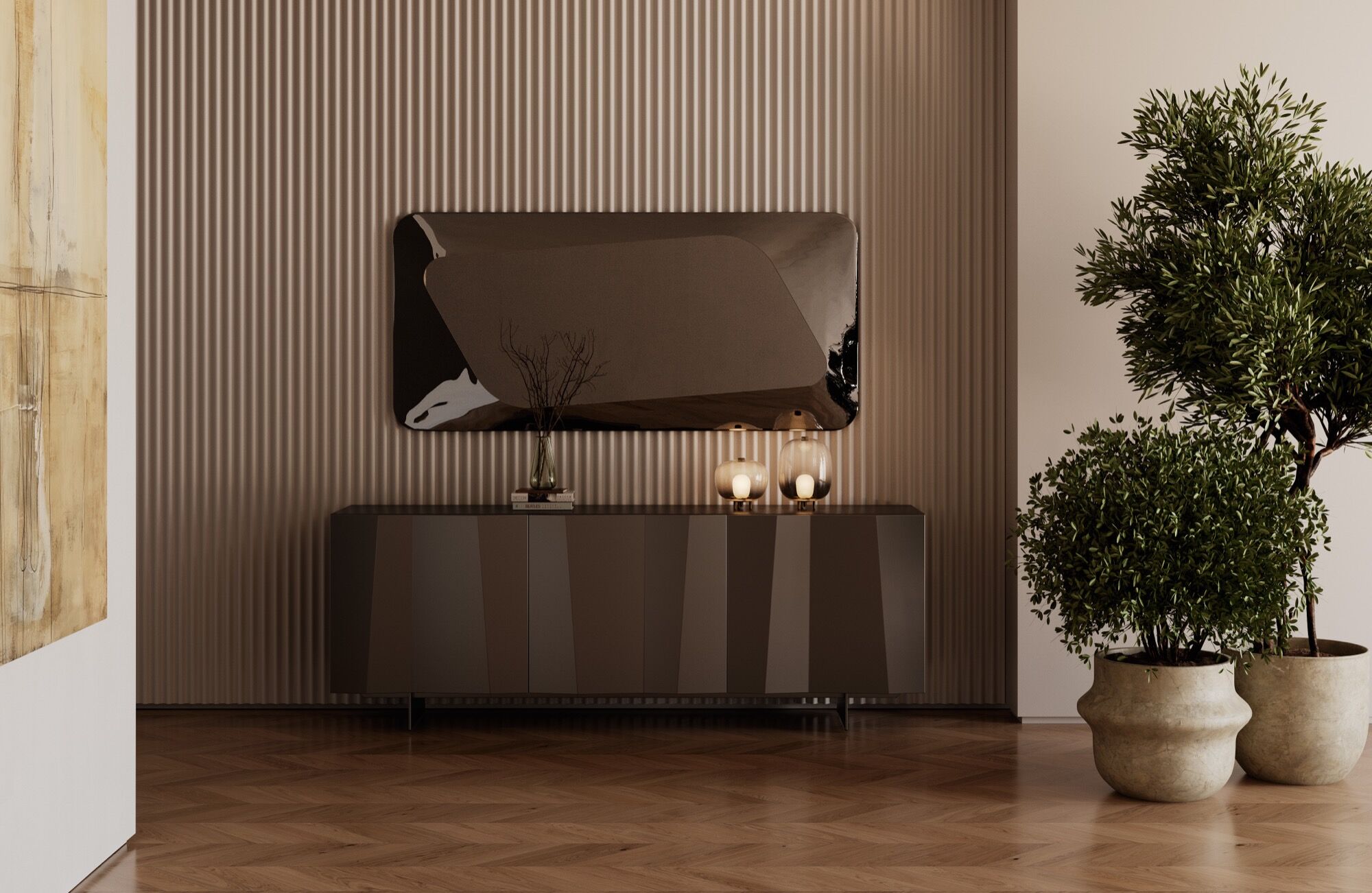

In November, you get home when it’s already dark outside. You open the door, put down your keys and feel for the light switch with your bag still on your shoulder. The hallway is the first room that welcomes us and, almost always, the last one we think about when furnishing. Yet it takes very little to make it more than just a passageway, especially now that the weeks when the door opens often for friends and family are drawing near.
In these hallway ideas we start from what you really need, namely a surface, a mirror and a light, and look at how to put them together so the result has character, whether your entrance is a true entrance hall or a corridor just one and a half metres wide.
Measurements first: walkway and depth
A hallway works when you can walk through it without thinking. In front of the main piece of furniture it’s best to leave at least 80-90 cm of clear space, the width you need to get past with a coat in your hand or a suitcase. It is this space that determines the type of furniture. The Tessa, Kunta and Musa sideboards are 46.5 cm deep, a console table such as Bach or Kimono stops at 45 cm and Piper at 40 cm, while a mirror with a shelf like Pill projects just 27.5 cm from the wall. In a spacious entrance hall you choose by taste; in a narrow corridor the centimetres choose for you.
| Model | Type | Dimensions (W x D x H) |
| Tessa 15.99 | Sideboard | 216 x 46.5 x 79.5 cm |
| Kunta 15.93 | Sideboard | 216 x 46.5 x 79.5 cm |
| Musa 15.49 | Sideboard on feet | 216 x 46.5 x 82 cm |
| Bach 06.42 | Console table | 145 x 45 x 74.5 cm |
| Piper 07.20 | Console table | 137 x 40 x 75 cm |
| Pill 09.27 | Mirror with shelf | 45 x 27.5 x 80 cm |
| Argo 09.60 | Mirror | 100 x 5 x 140 cm |
| Focus 09.59 | Mirror | 180 x 5 x 85 cm |
| Tondo 09.38 | Mirror | Ø 180 cm, 3 cm thick |
If you have less wall space, look at the 144 cm versions available for Tessa and Musa: same depth, a third less footprint.
Sideboard and mirror: the pairing that solves the hallway
When there is room, the sideboard is the most complete piece of hallway furniture. It hides what you’d rather not see, from seasonal scarves to bags, and offers a long top on which to set down keys, post and a lamp. Above it, the mirror does two jobs: it multiplies the light, which is often scarce in a hallway, and gives you one last look before heading out. Here are three possible pairings, each with a different character.
Tessa and Argo: light gliding over surfaces
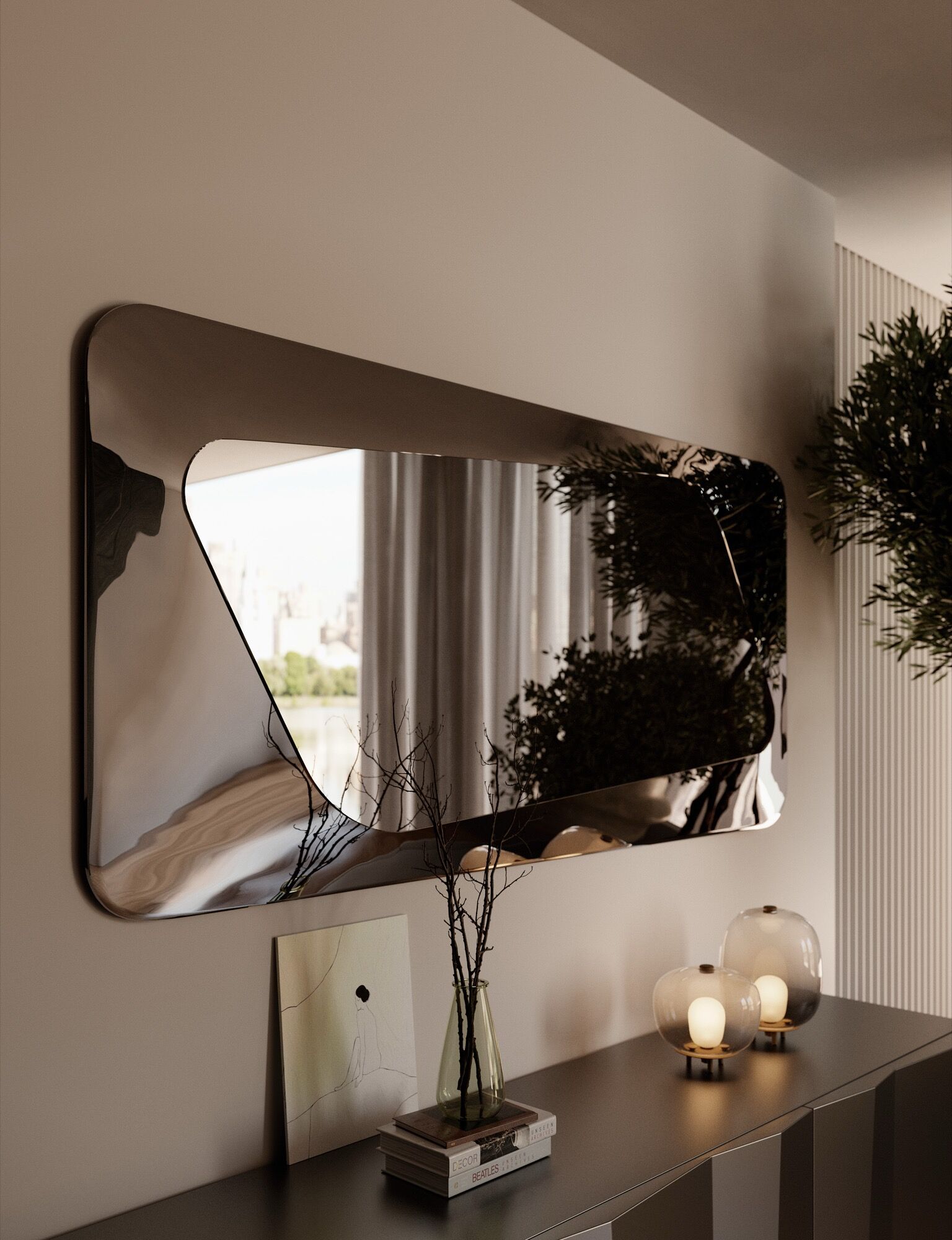
Tessa, designed by Shannon Sadler, has painted metal doors crossed by subtle facets. Depending on where you look at it from, the light traces them differently, and the sideboard seems to change as you walk past. Above it, Argo by Luca Roccadadria applies the same thinking to glass: the mirrored surface bends into a wave that wraps around part of the edge, creating a three-dimensional frame made only of reflections. It measures 100 x 140 cm and works both horizontally, above a long sideboard, and vertically, when the wall is narrow and tall.
Kunta and Focus: folds and dark reflections
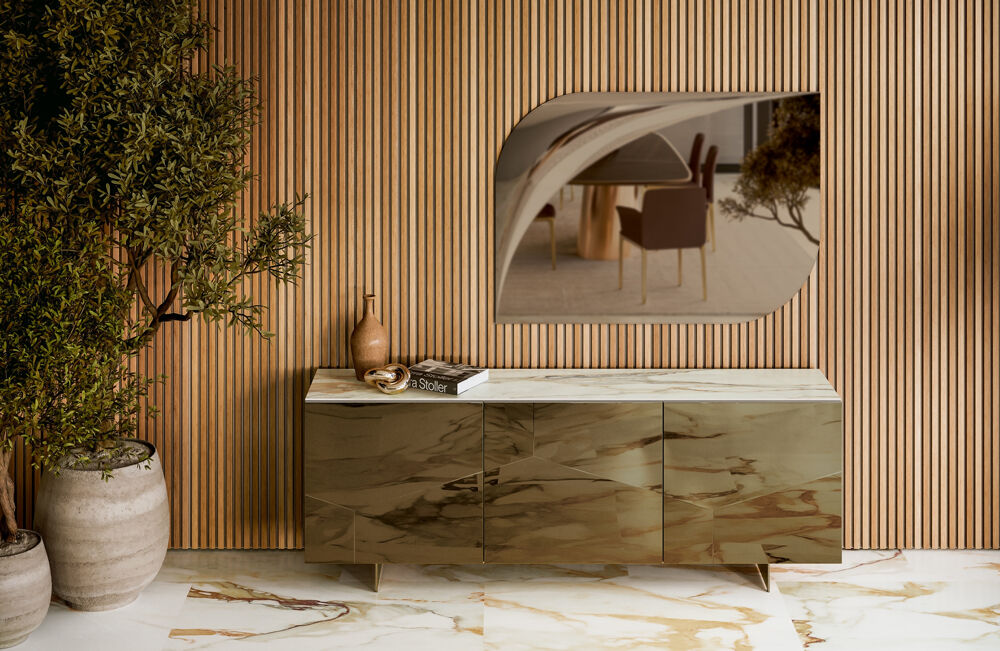
Kunta, by studio e-ggs, has wooden doors worked like folded sheets of paper, an explicit nod to origami. In a dark finish the folds become almost graphic, and this is where a smoked mirror is at its best. Focus, designed by Andrea Lucatello in fused glass, has a raised rounded edge that frames the surface like a sculpted element: in the opening composition, the 180 x 85 cm rectangular version fills the wall above the sideboard without overpowering it. Two Blow lamps in shaded smoked glass complete the picture and, in the evening, give a soft light even when the rest of the house is dark.
Alt text: Detail of the origami-effect doors of the Bontempi Kunta sideboard in a dark finish with two glass table lamps
Musa and Tondo: wood in motion
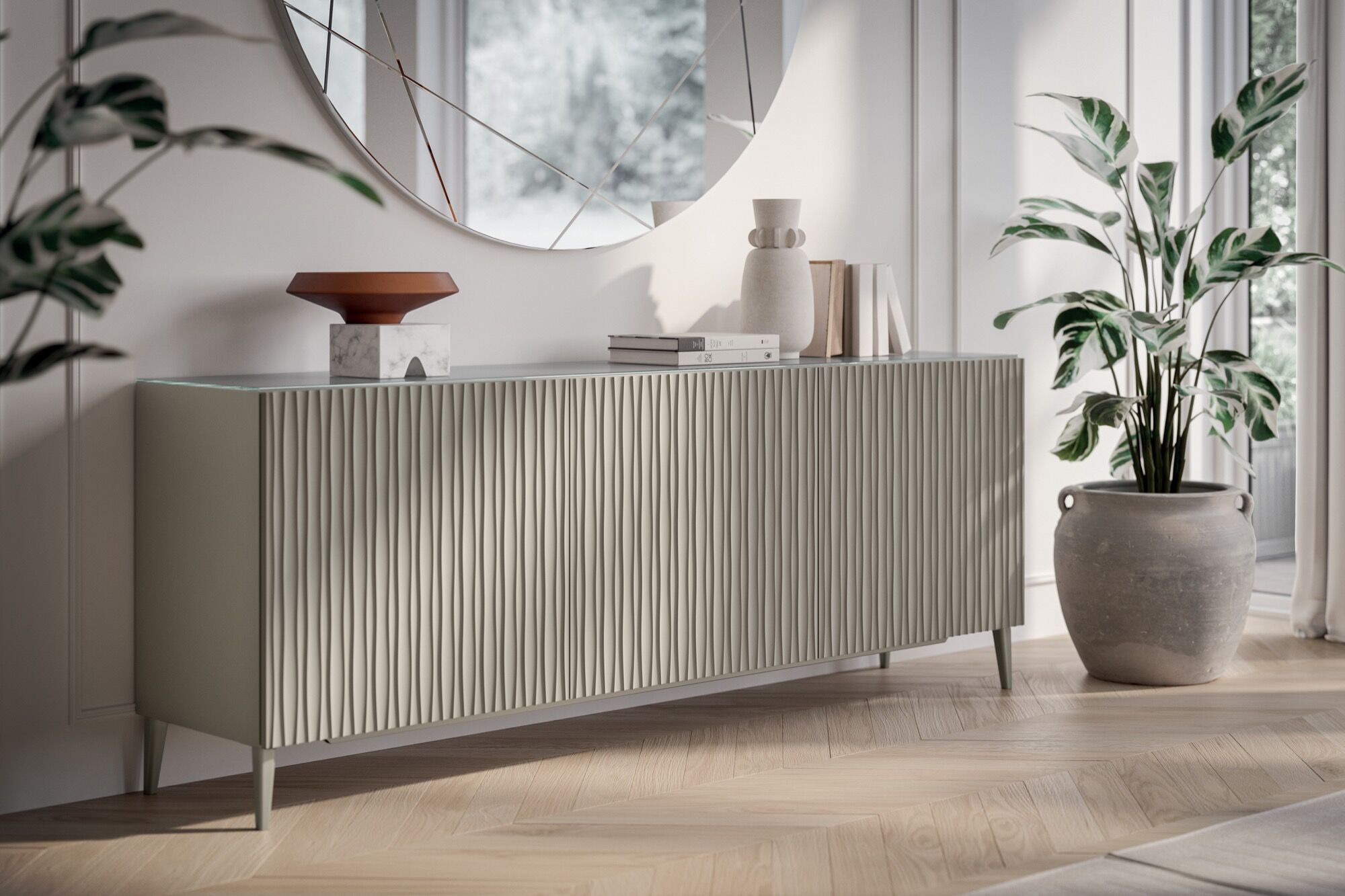
Musa, also by e-ggs and winner of the German Design Award 2025, has wooden doors with vertical grooves that play with grazing light. It comes in a lower version, 69.5 cm high and resting on the floor, and in a version on feet, 82 cm high. The first has a more architectural feel; the second is lighter and leaves the floor visible, a detail that makes a hallway look more spacious. With a 180 cm diameter Tondo mirror, the composition changes scale and becomes the focal point of the room.

How to choose a hallway mirror
A hallway mirror is chosen on three criteria: shape, size and finish. A rectangle brings order and rigour, a round mirror softens the wall, and a shaped design like Argo becomes almost a work of art. There is more freedom on size than you might think: the mirror doesn’t need to be as wide as the furniture beneath it; what matters is that its centre falls roughly at eye level and that it stays visible as you come in. Focus comes in a 180 x 85 cm rectangular version and a 120 x 120 cm square one, Tondo in 180 and 140 cm diameters.
Then there is the finish, which changes everything. Bronze mirror glass warms the wall and pairs well with brass, light woods and sand tones. Smoked glass is moodier and more graphic, perfect alongside dark finishes. Both reflect less light than a silver mirror: in a windowless hallway it’s worth bearing this in mind, or pairing the main wall with a smaller silver mirror. The full collection is in the Bontempi mirrors section.
Small hallway furniture: console tables and shelves
When the hallway is a corridor, the sideboard makes way for the console table. Piper by Pio & Tito Toso is just 40 cm deep, with a steel frame and top and a leather shelf. Bach by Andrea Lucatello and Kimono by e-ggs reach 45 cm and combine lacquered steel, veneered wood and SuperMarble, in lengths of 145 or 175 cm. Bach, incidentally, is by the same designer as Focus: pairing them is the simplest way to create a coherent wall.
If even a console table is too much, the answer is a hallway shelf built into the mirror. The pill, designed by e-ggs, has a slim shelf that runs across the surface and acts as a catch-all tray, projecting just 27.5 cm from the wall. You’ll find more ideas on where to place a console table at home in our article on console tables with mirrors.
Lighting: small lamps, big impact
In a hallway, overhead light is necessary, but it isn’t enough. It’s a table lamp that makes it welcoming when you come home in the evening, and lets you find your keys without switching everything on. On top of a sideboard or console table, compact models work well, such as Blow, with a natural brass base and a borosilicate glass diffuser, available in a large and a small version. For more options, take a look at the collection of Bontempi lamps.
A seat in the hallway
If space allows, a seat changes how the hallway is used: you sit down to tie your shoes, put your bag down, wait for whoever is finishing getting ready. Rather than just any hallway chair, it’s worth choosing a compact accent chair that furnishes the space even when no one is using it. We covered this in our guide to designer armchairs, with sizes and models compared.
Hallway furniture FAQ
How do you furnish a small hallway?
Start with the walkway: you need at least 80-90 cm of clear space in front of the furniture. In narrow corridors, a shallow console table such as Piper (40 cm) or a mirror with an integrated shelf like Pill, which projects 27.5 cm from the wall, is the better option. A large mirror helps make the space look bigger.
Sideboard or console table: which is better for the hallway?
A sideboard is the better choice when there is space and you need storage: models such as Tessa, Kunta and Musa are 46.5 cm deep and offer doors and shelves. A console table is the right choice for corridors and narrow hallways, because it takes up less depth and keeps the wall lighter.
Which mirror should you put in the hallway?
It depends on the wall and the light. A rectangular mirror brings order, a round one softens, and a shaped one becomes decorative. Bronze mirror glass warms the space, while smoked glass is more graphic; in a windowless hallway a silver mirror reflects more light.
How high should you hang a hallway mirror?
The rule of thumb is to have the centre of the mirror at eye level, usually around 150-160 cm from the floor. Above a sideboard or console table, leave a few centimetres between the top and the bottom edge of the mirror, so you can set down a lamp or an object without covering it.
How do you light a windowless hallway?
With several light sources: general ceiling light, a table lamp on the furniture and a mirror that reflects both. Compact table lamps such as Blow create a soft light that makes the hallway welcoming in the evening too.
What should you put on a hallway sideboard?
A few well-chosen things: a catch-all tray for keys, a lamp, a book or a vase. Leaving part of the top clear is important, because the hallway is where you put down everything you’re carrying when you come home.
The first room you see, the last you leave
The hallway is the room you see first when you come in and last when you go out, every day. It deserves the same attention you give the living room: you don’t need much furniture, just a few pieces in the right place.
Discover sideboards, mirrors and console tables in our selection of hallway furniture, customise finishes and sizes with the online configurator and see the models in person at your nearest retailer.
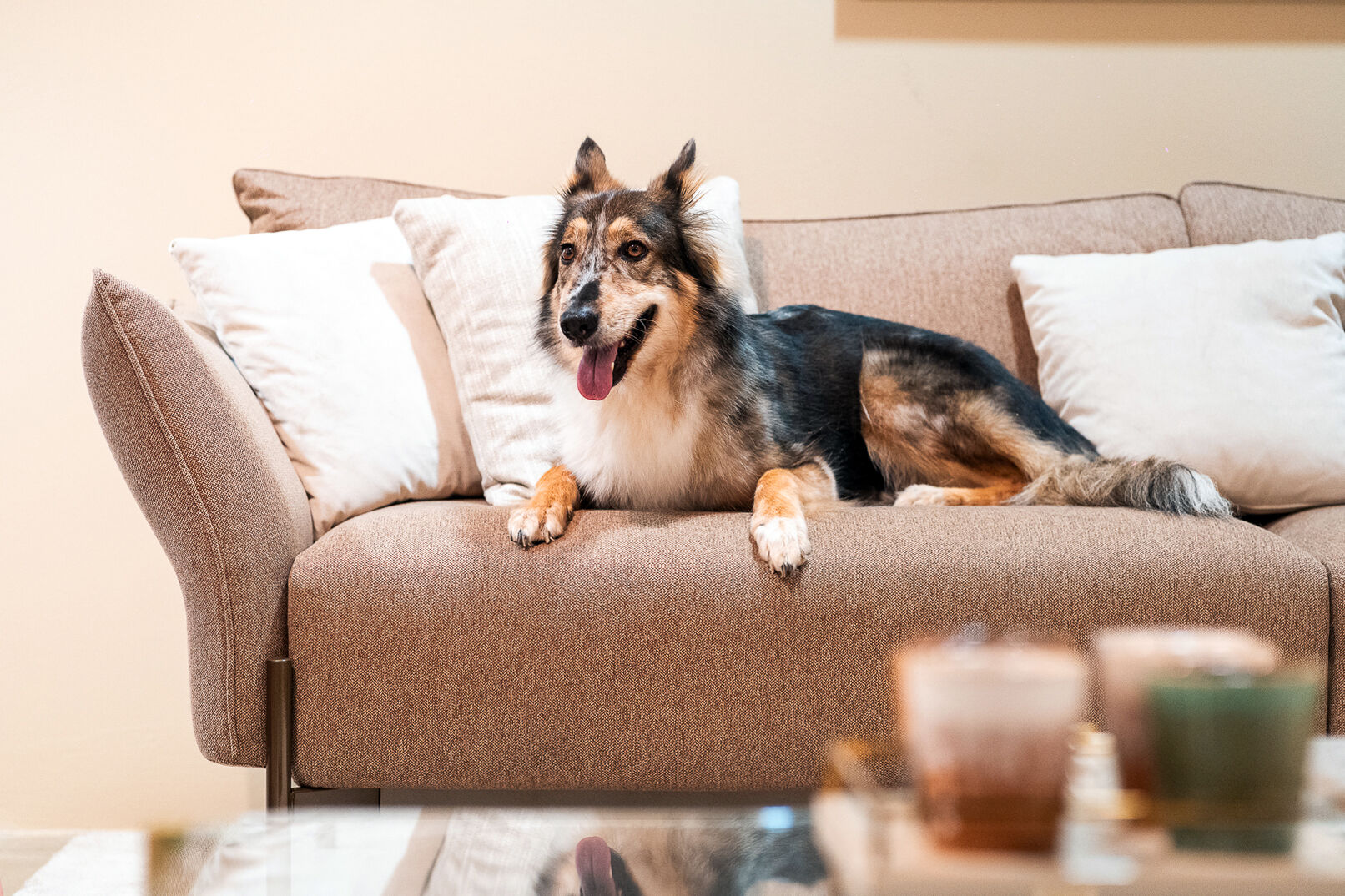
Bontempi opens its doors to pets: Gourmet
is the fabric designed to live with them.
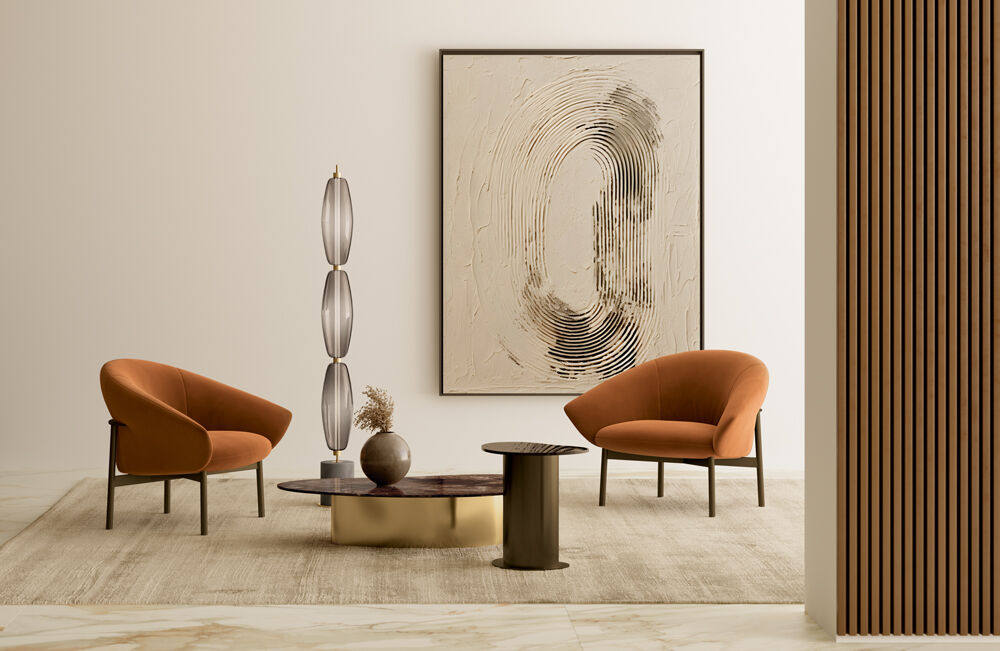
Designer armchairs: how to
choose the right one for your home
Bontempi brings the 2026
Collection to High Point Market
Dining tables for every
space: materials, shapes and sizes
Living room furniture: the
complete guide to modern style
Bontempi wins the prestigious Red
Dot Design Award for the PETRA armchair

The elegance of summer: how to
furnish sea-view living spaces

Ideas for Furnishing a
Small House with Style
Bontempi unveils the 2026
collection at Salone del Mobile.Milano